
Why the Store Is Becoming the Brand in 2026
- CSK Architects

- Jan 22
- 2 min read
For years, retail strategy has chased one goal: convenience.
Faster che
ckouts. Fewer steps. Less friction.
But according to Gensler’s 2026 Design Forecast, the future of retail isn’t defined by how quickly customers can move through a store. It’s defined by how deeply they remember being there.
Retail is being reshaped by a push and pull between digital efficiency and the irreplaceable value of physical presence. While e-commerce optimizes speed, global brands are reinvesting in physical assets. From short-term pop-ups to flagship ownership, signaling confidence in the store as a long-term platform for memory-making, identity, and community.
In an era of infinite choice online, being there is becoming the differentiator.
From Storefronts to Cultural Landmarks
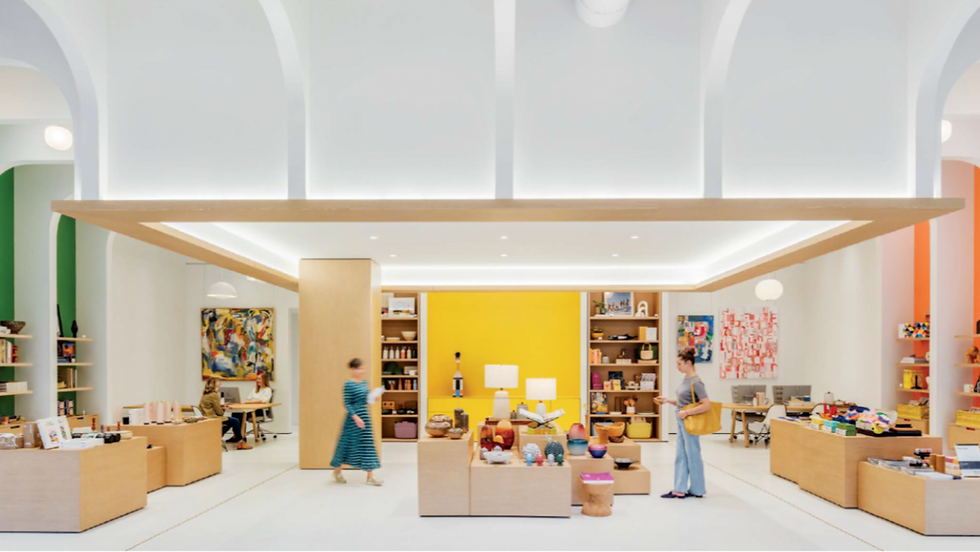
What’s next is a fundamental shift: stores go beyond product to become cultural landmarks.
Successful in-person experiences are no longer just about shopping. They are extensions of the brand itself. Whether it’s lining up outside a streetwear flagship or spending time in a café operated by a luxury house, the value of physical retail is increasingly tied to belonging and identity.
The store becomes a place people want to visit not because they need something, but because it means something.
Premium Brands Are Building Lifestyle Ecosystems
Luxury brands, in particular, are leading this evolution.
They are no longer just selling products, they are building immersive lifestyle ecosystems. Cafés, hotels, museums, airport lounges, and even private planes extend the brand far beyond the retail floor. Flagships evolve into cultural anchors, while loyalty becomes a form of social currency.
What matters most isn’t only what you buy. It’s the branded world you’re invited to step into.
These environments deepen emotional connection and reinforce identity, creating long-term value that outperforms transactional loyalty programs.
Why Ownership Is a Strategic Advantage
Another major shift highlighted in Gensler’s report: ownership gives retailers a competitive edge.
By owning real estate, brands gain freedom. Freedom to test new formats, pivot quickly, and extend into hospitality, culture, and community. Physical space becomes a canvas for experimentation rather than a fixed cost to optimize.
With control comes the ability to continually reinvent. Stores are no longer static assets; they are living platforms that evolve alongside consumer expectations.
Embracing “Good Friction”
Perhaps the most counterintuitive insight: the best retail destinations aren’t frictionless.
They embrace what Gensler describes as positive friction or “good sticky.” An unexpected queue. An immersive installation. A social moment that slows you down.
These moments create anticipation, memory, and meaning. They transform a visit into a story worth telling and a destination worth returning to.
In a world optimized for speed, slowing people down becomes a strategic advantage.
The Takeaway
Retail’s future isn’t about choosing between digital and physical. It’s about understanding the unique power of place.
The brands that will win are those that design spaces not just to sell products, but to build culture, community, and connection.
Because in 2026 and beyond, the most valuable retail experiences won’t be measured in square footage; they’ll be measured in how people feel long after they leave.
Ready to take your retail experience to the next level?


Comments